Tag: #ресурснийцентр

  • CLS оновлює інтерфейс і розвиває цифрові інструменти для громад
    CLS is updating its interface and developing digital tools for communities

    CLS is updating its interface and developing digital tools for communities

    The CLS platform continues to evolve. Our team is growing, the resource center is stepping up its efforts, and our digital tools are becoming more user-friendly, organized, and useful for communities, partners, donors, investors, and platform users.

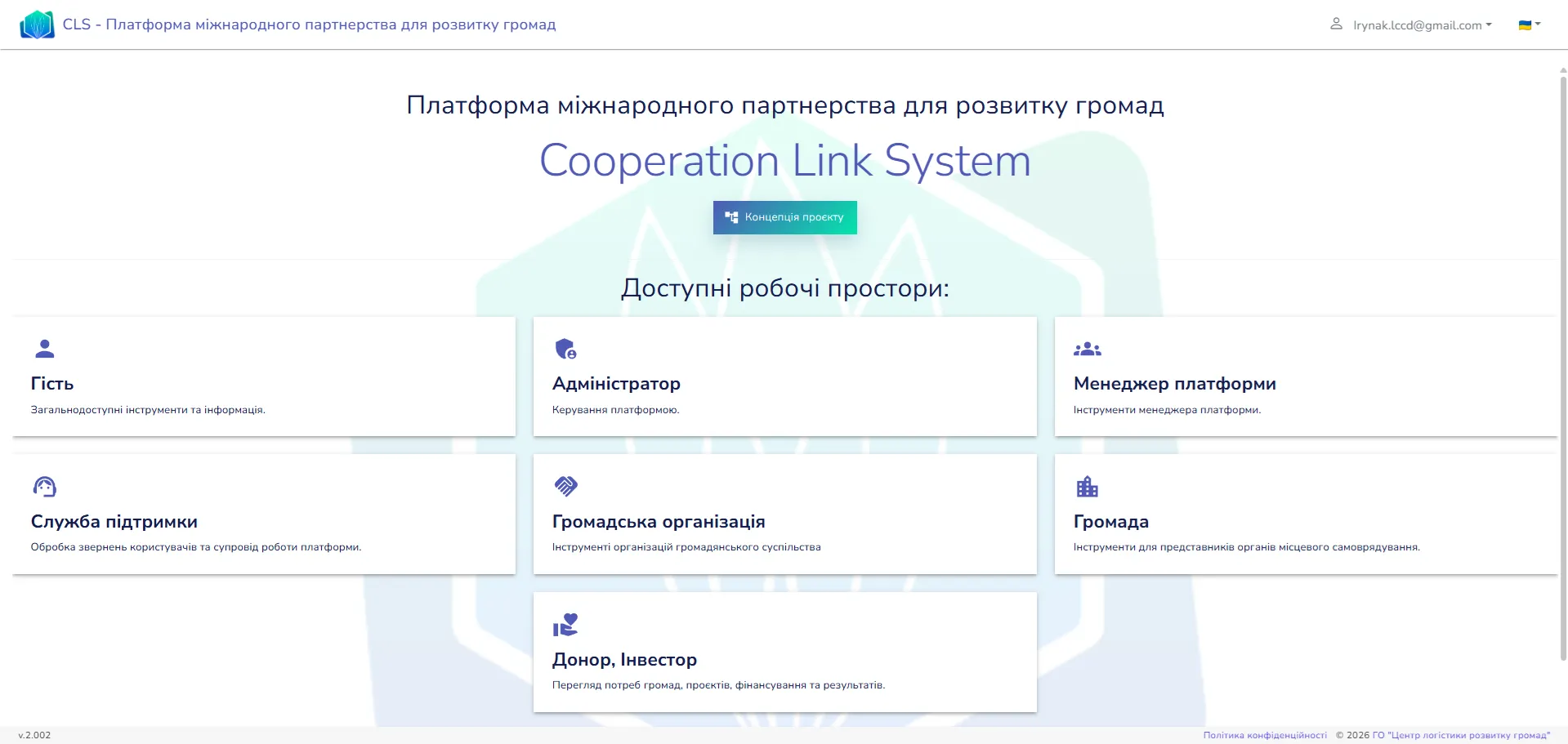
    As part of this development, CLS has introduced a redesigned interface.

    We understand that any changes in the digital environment may raise questions among users. That is why it is important to emphasize that the basic logic of using the platform remains simple and straightforward.

    As before, the user follows the basic steps for interacting with the platform:

    Sign up or log in → select a role → go to the workspace → access the relevant tools.

    What has changed

    The updated interface now includes a home page. It helps users quickly find their way around and navigate to the workspace they need.

    Workspaces are configured based on the user's role and access level. This means that each user sees only the tools they need for their work.

    The platform supports various roles, including:

    • community;
    • nonprofit organization;
    • donor;
    • investor;
    • administrator;
    • platform manager;
    • guest.

    This approach makes the platform more user-friendly, intuitive, and secure for a wide range of users.

    “Guest” mode
    A separate mode is provided “The Guest”. In this mode, you can view the publicly available tools and explore the features of CLS.
    This is helpful for those who are just getting started with the platform, want to see how it’s structured, and understand how CLS can be useful for community development.

    Digital Models of Community Development
    One of CLS’s key areas of focus is the creation of digital community development models. Soon, every community that has developed a development strategy in collaboration with CLS will receive its own digital development model.

    A Digital Development Model - is an interactive space in which a community’s strategy becomes not just a text document, but a practical tool for action.

    In this model, you will be able to see:

    • the community's strategic goals;
    • areas of development;
    • projects;
    • the logic behind the strategy's implementation;
    • progress report.

    This enables communities to better plan for development, track changes, engage partners, and gradually transition from a strategy “on paper” to a dynamic digital development management system.

    We're not standing still
    The interface update is more than just a technical change. It is part of CLS’s broader development as a resource center and digital platform for communities.
    We are building our team, expanding our expertise, creating new opportunities, and working to ensure that communities have access to modern tools for strategic planning, recovery, attracting investment, and implementing projects.

    The activities and development of the resource center of the NGO "Logistics Center for Community Development" are carried out with the support of the International Renaissance Foundation as part of the “Impulse” project.

    CLS grows alongside communities.
    And our main focus remains the same—to help communities envision their future, plan for it, and bring it to life using digital tools.

    Author:

  • Ресурсний центр ГО «Центр логістики розвитку громад» об’єднує аналітичний та інженерний центри

    The Resource Hub of the NGO “Logistics Center for Community Development” unites the analytics and engineering units

    The Resource Hub of the NGO “Logistics Center for Community Development” unites the analytics and engineering units

    The Resource Hub of the NGO “Logistics Center for Community Development” functioned as a comprehensive platform to support communities in matters of strategic planning, recovery, infrastructure development, and project implementation.

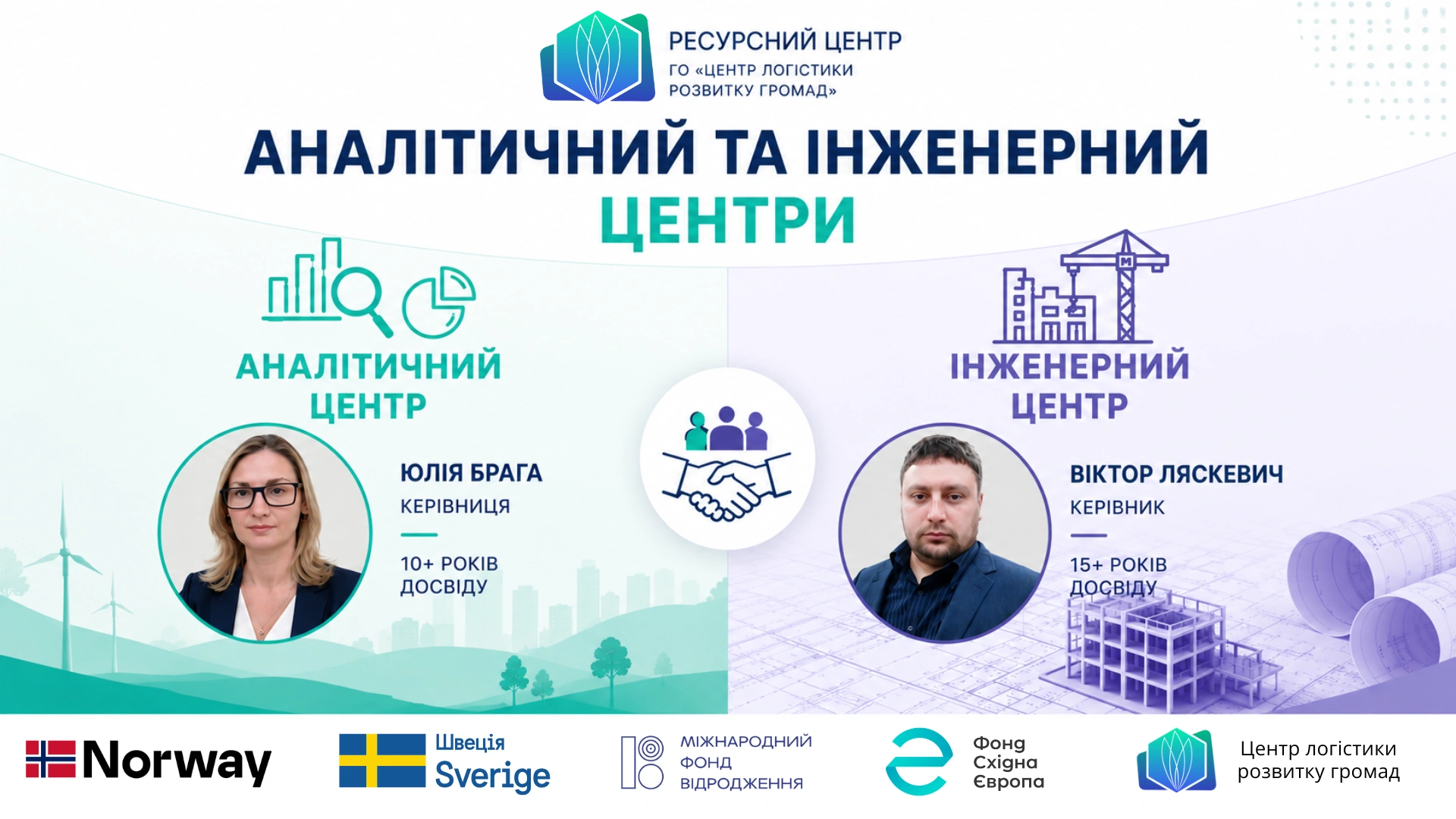
    Since January 2026, the center has been structured around two key directions — the analytical and engineering units — which ensure a complex approach to regional development: from needs analysis and the development of strategic decisions to technical support and investment preparation for projects.

    Analysis Unit

    The head of the analytical unit is Yuliia Braha, who serves as the organization’s executive director and has over 10 years of professional experience.

    The unit's main fields of work are:

    • strategic planning and analytics; 
    • preparation of development and recovery programs; 
    • analytical support for communities; 
    • support for digitalization initiatives; 
    • preparation of grant and investment materials; 
    • monitoring the implementation of projects and strategies. 

    Engineering Unit

    The head of the engineering unit is Viktor Liaskevych, a design engineer with 12 years of professional experience.

    Main responsibilities of the engineering unit:

    • engineering and technical support for infrastructure projects; 
    • preparation of technical solutions, feasibility studies, and project documentation; 
    • development of digital and visual models of buildings and infrastructure facilities; 
    • assessment of the technical condition of facilities; 
    • providing investment support for projects and preparing them for presentation to investors, donors, and partners. 

    By combining analytical and engineering expertise, the resource hub provides communities with comprehensive support in developing a strategic vision, preparing high-quality projects, and securing the resources needed to implement them.

    The work and expansion of the NGO “Logistics Center for Community Development” are supported by the International Renaissance Foundation as part of the “Impulse” project. This enables us to strengthen our analytical and engineering work, systematically support communities in strategic planning, prepare infrastructure projects, and search for resources to implement them.

    Author: