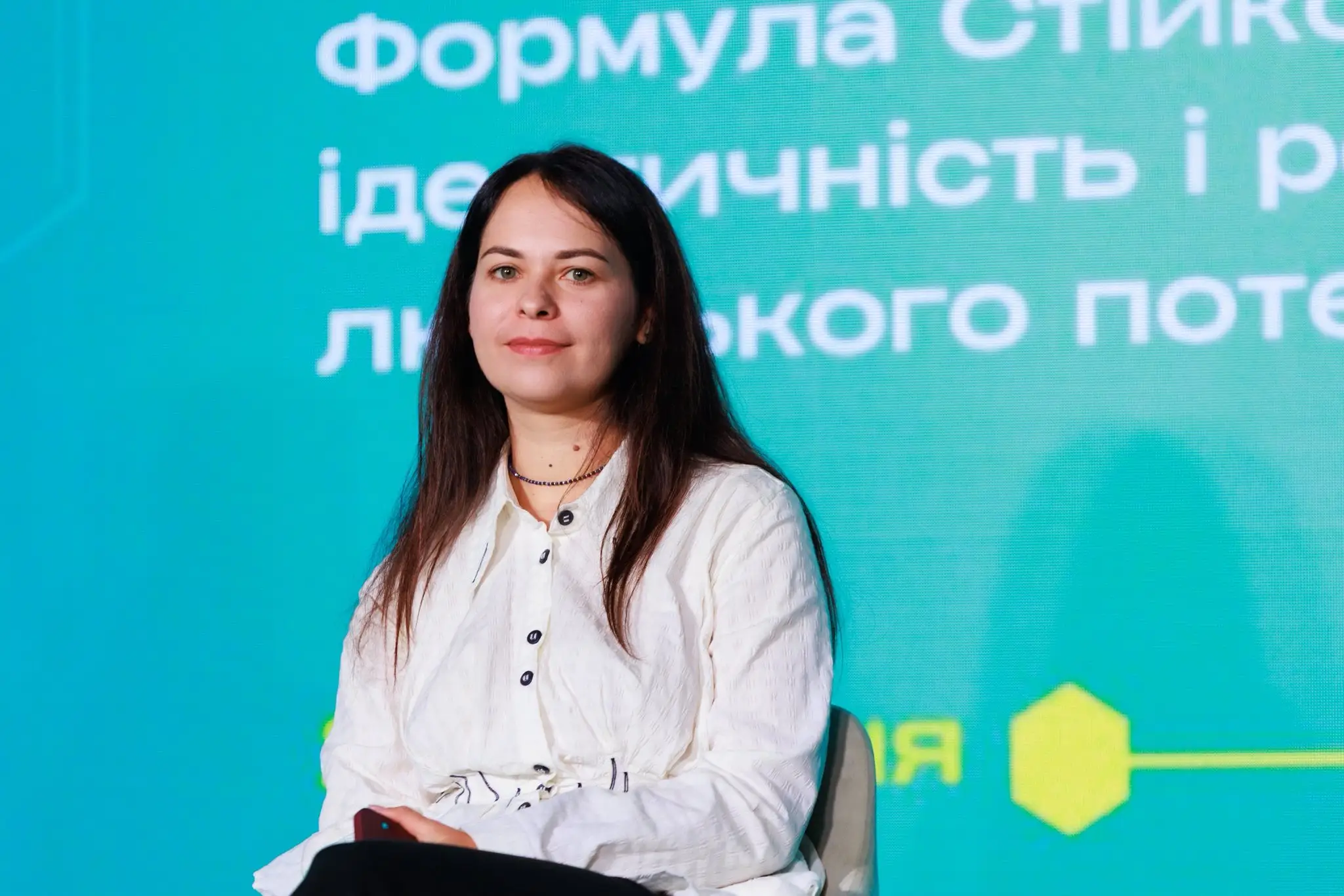
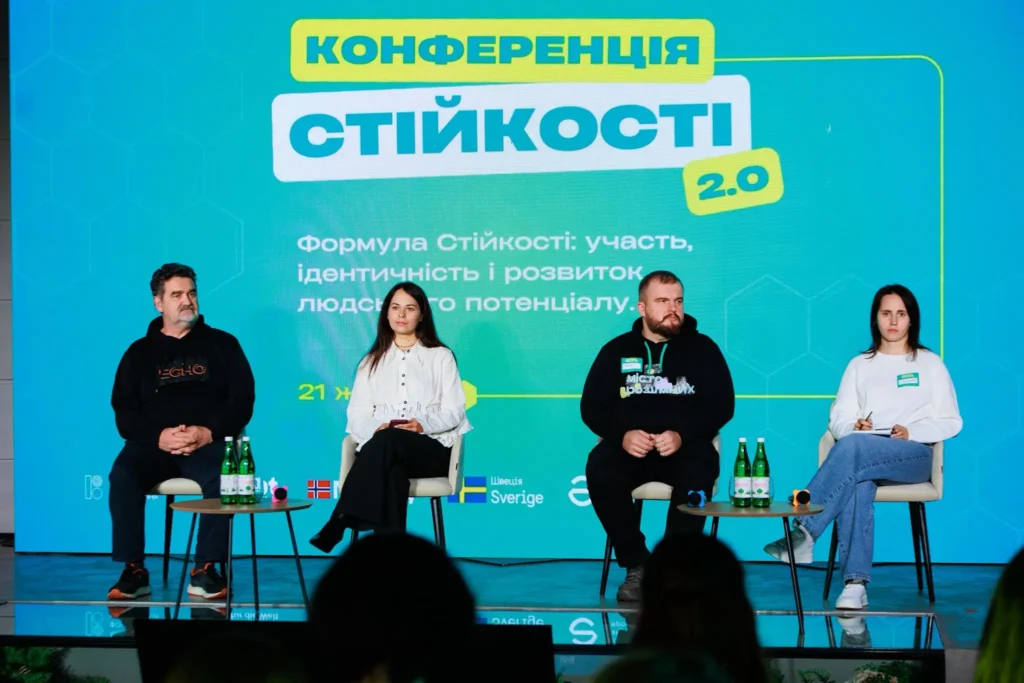
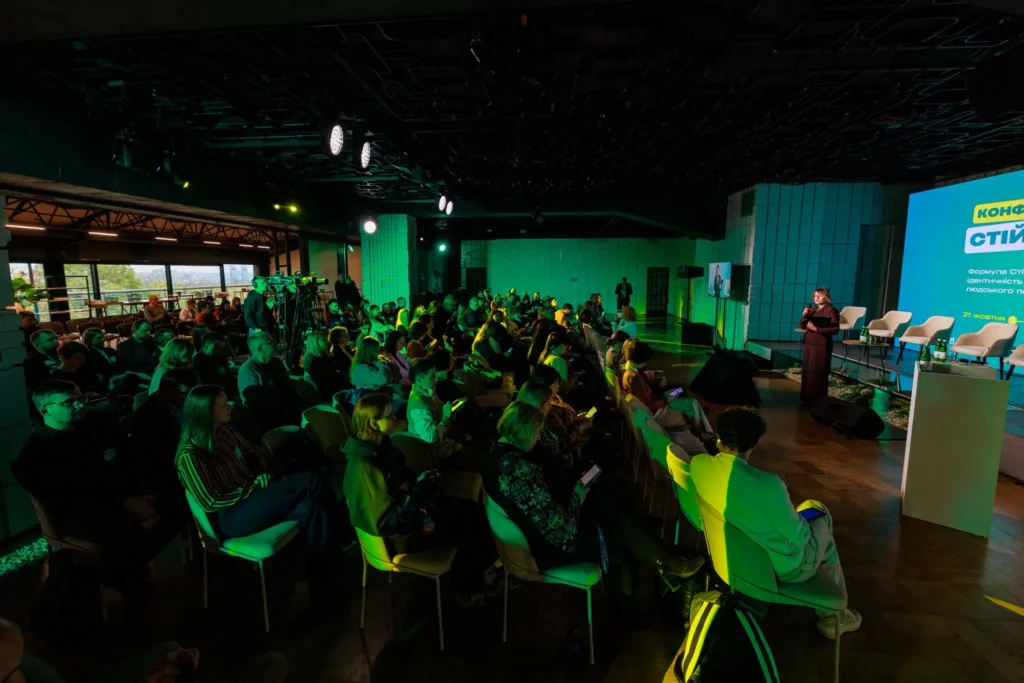
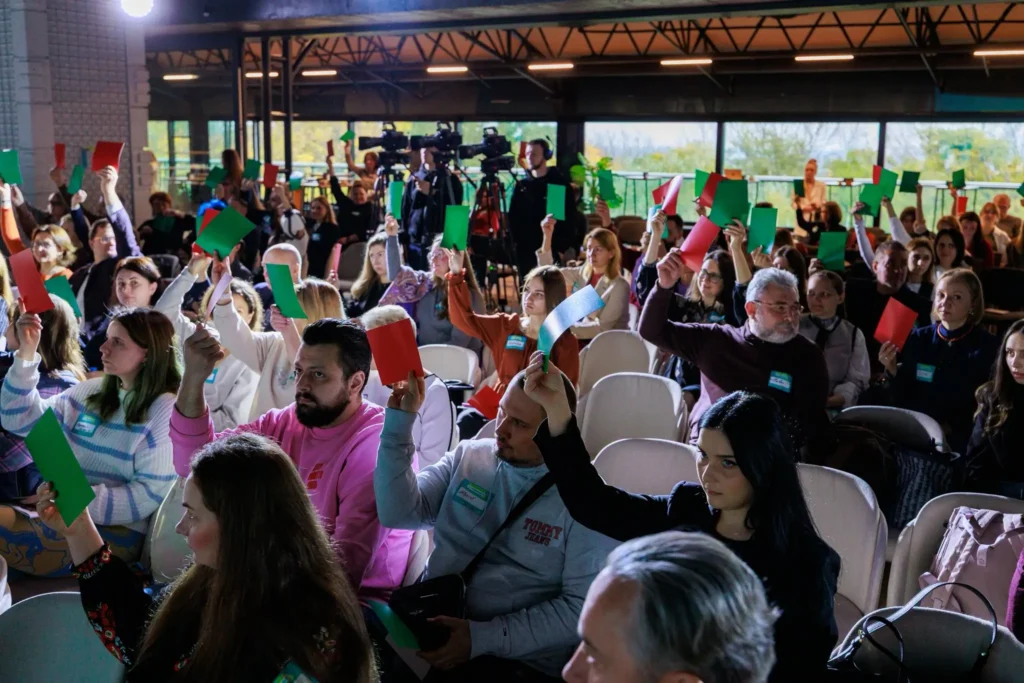
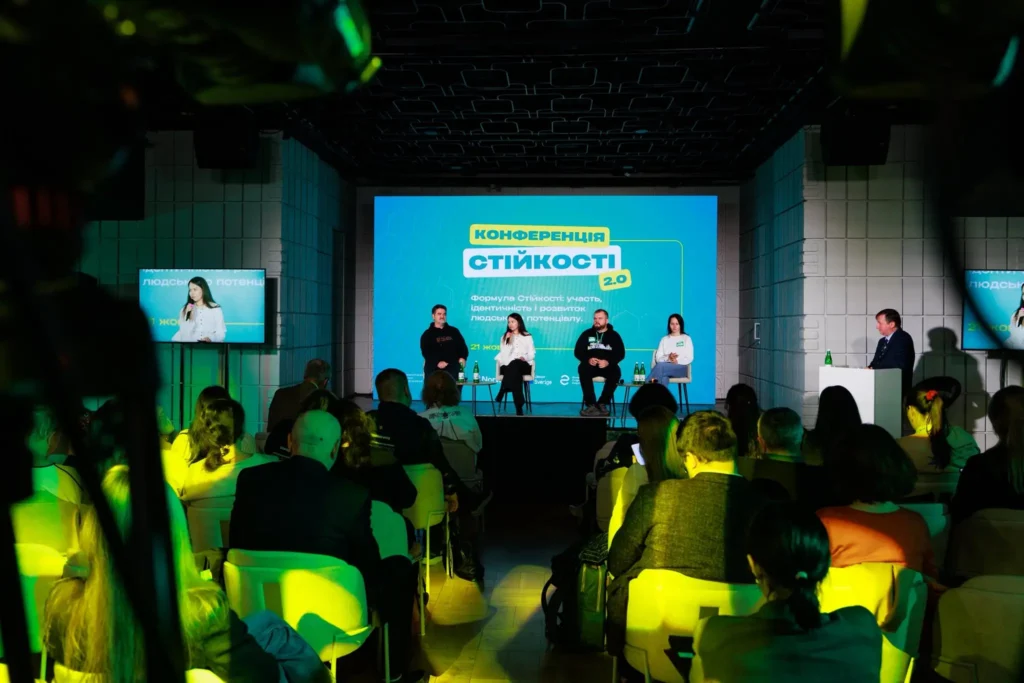
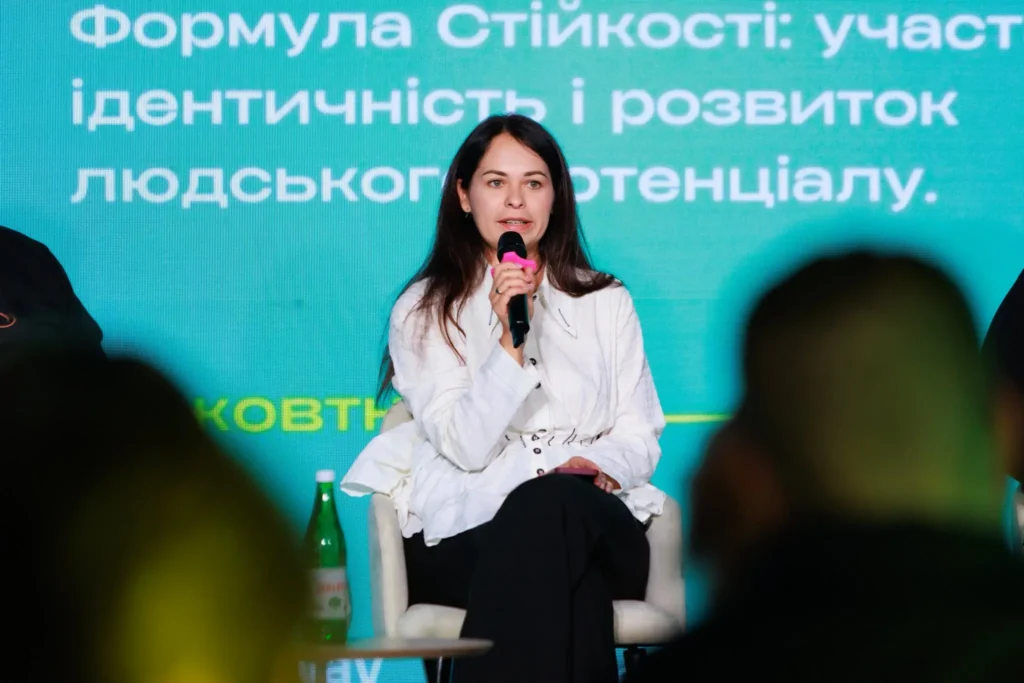
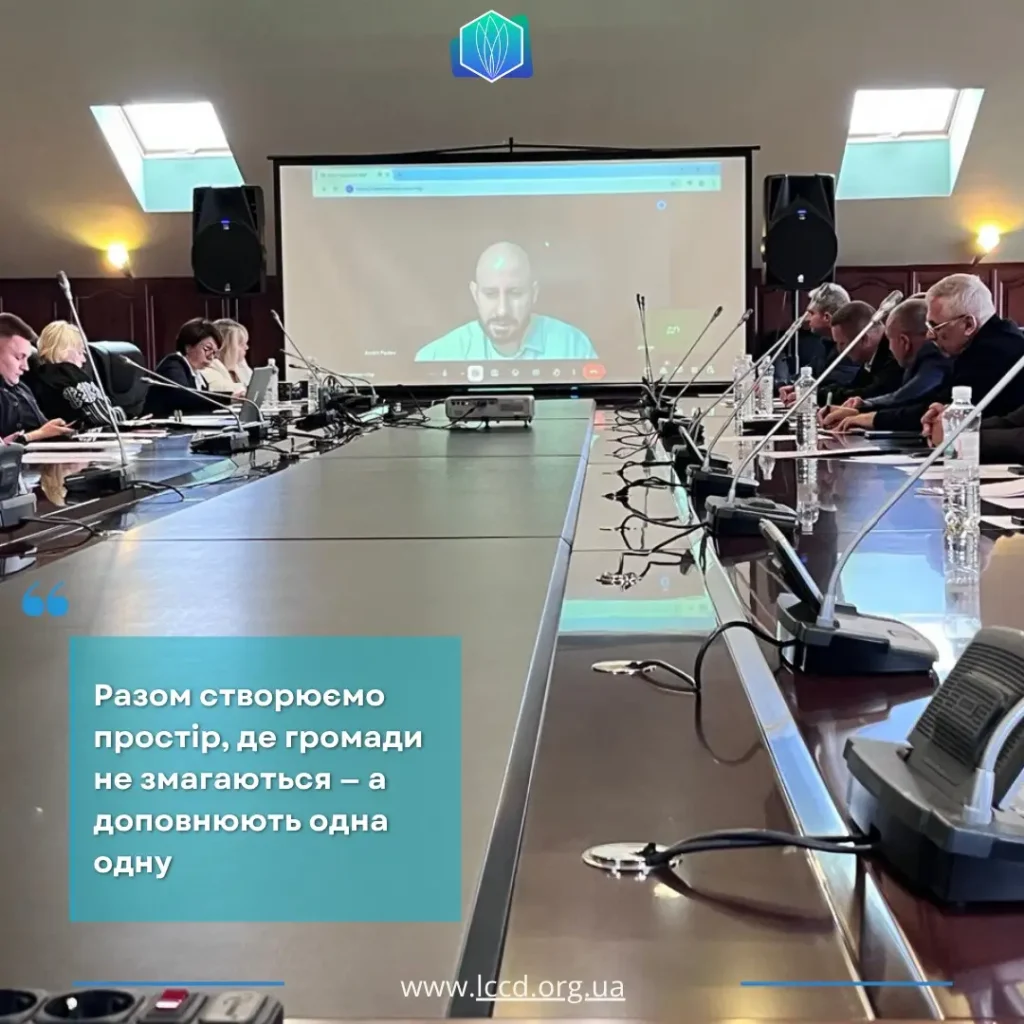
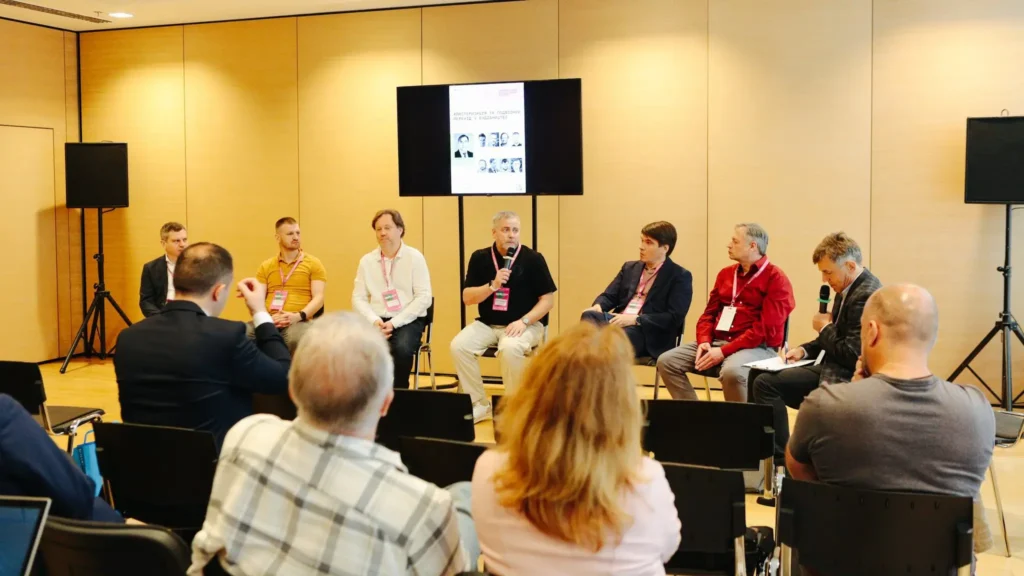
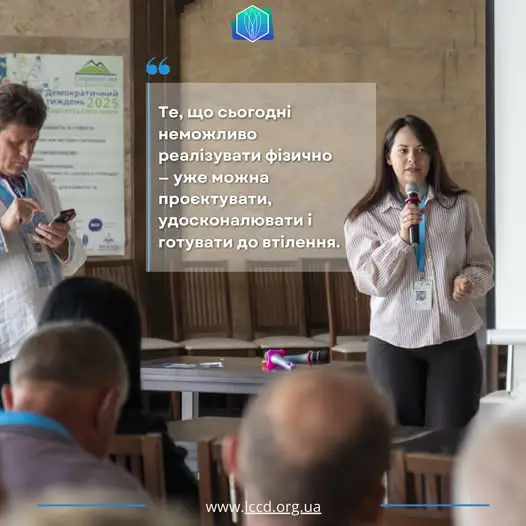
During the panel discussion, Irina Karashchuk, co-founder of the NGO and expert in community finance and digitalization, spoke about how strategic planning and digital tools help communities strengthen resilience, effectively implement programs development and involve residents in decision-making.
Resilience is not just about the ability to survive, but also about the ability to adapt, act together, and see the future.
Together we are forming the Ukrainian Sustainability Formula!
Prykarpattya Hub: cooperation instead of competition
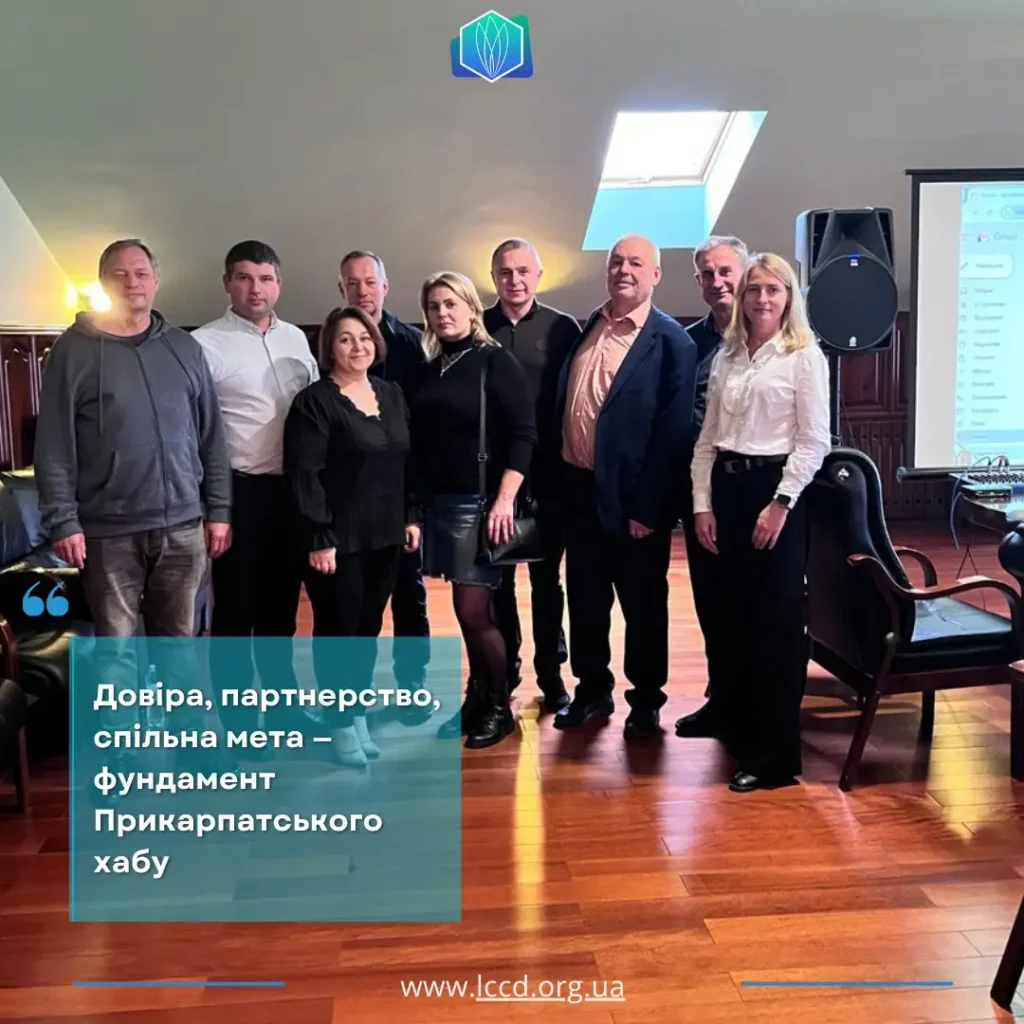
At the XIV Forum of the Commonwealth of Communities of Lviv and Sumy Regions, which brought together 40 communities, the NGO "Center for Community Development Logistics" presented the beginning of cooperation on the creation of the Precarpathian Recreational and Health Hub through the CLS platform.
Today, it is important that communities do not act as competitors, but join forces to develop common directions. When each community works separately, resources and initiatives are often duplicated. Working together allows us to coordinate priorities, more effectively use the potential of territories, and achieve results that strengthen the region as a whole.
Through CLS, we are analyzing the potential of nine communities in the Lviv region in the areas of tourism, health, rehabilitation, and logistics to form a coordinated vision for the development of the Precarpathian Hub as an inter-community initiative.
Analytical report and database of typical projects: a resource for communities and CSOs
With the support of the International Renaissance Foundation within the framework of the Impulse project, the Resource Center prepared an analytical report that became the basis for forming a base of typical reuse projects for communities and public organizations.
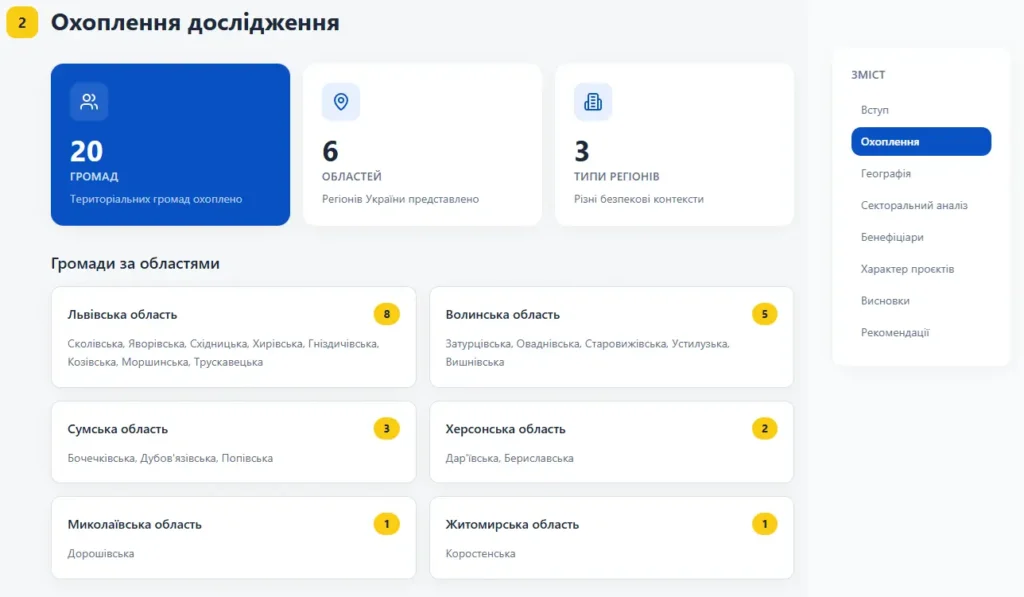
The analytical work is based on a systematic analysis of requests from territorial communities and practical experience in supporting infrastructure and social projects. The study analyzed 20 territorial communities in 6 regions of Ukraine, taking into account different security and socio-economic contexts.
Key analytics results
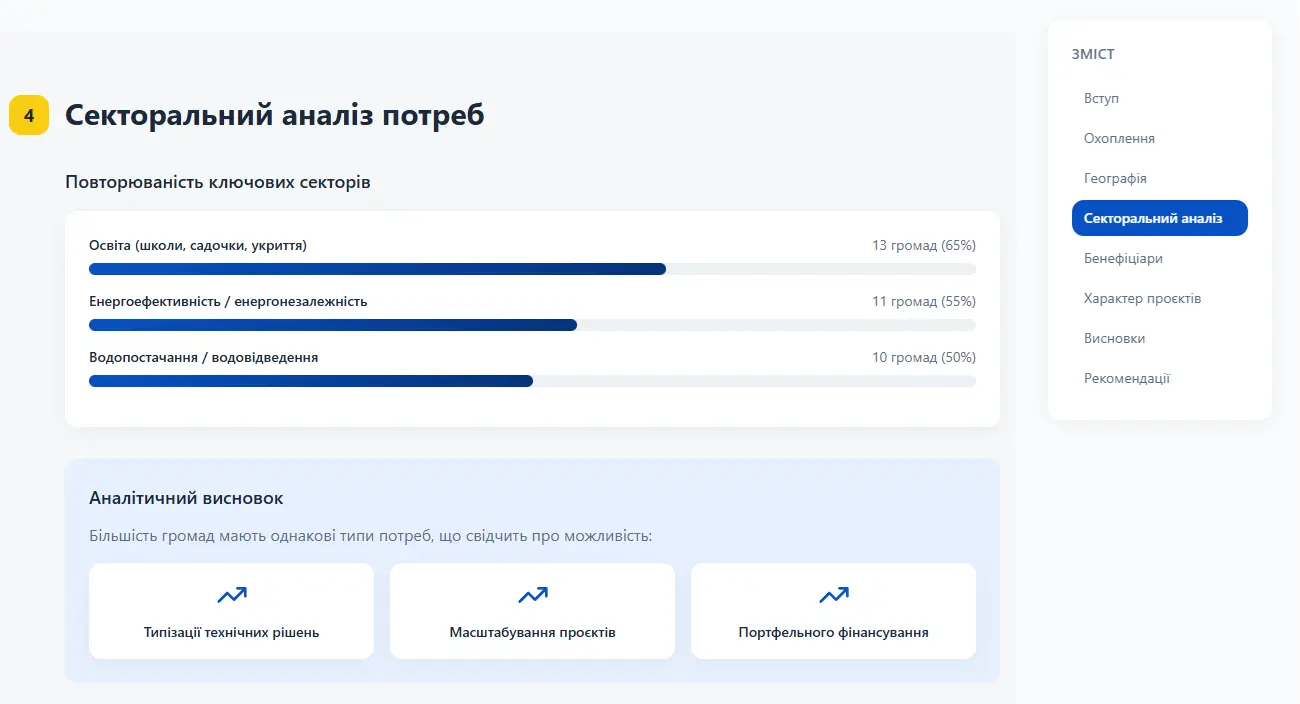
The analysis showed that communities, regardless of region, form a similar structural request, in particular in the areas of:
educational infrastructure;
energy efficiency and energy independence;
social and medical infrastructure;
security and civil protection;
water supply and drainage;
youth, sports and cultural infrastructure.
The recurrence of such needs creates opportunities for typification of technical solutions, scaling of projects, and application of a portfolio approach to their implementation.
Database of typical reuse projects
Based on the analytical report, the Resource Center is forming a database of typical reuse projects, which will be available to local governments and public organizations.
The database will include:
structured descriptions of typical projects;
indicative budgets and readiness levels;
implementation logic and expected social effect;
recommendations for further refinement and funding attraction.
For CSOs and LSGs
For public organizations and local governments, the database of typical projects will become a practical tool that will help:
to form project initiatives for their communities more quickly;
rely on analytics and proven solutions;
reduce the time for preparing applications;
improve the quality of projects submitted for funding.
The formation of a base of typical projects is part of a systemic approach to community development and is aimed at moving from isolated initiatives to more coordinated and effective solutions.
A detailed analytical report and access to the database of typical reuse projects will be published later. Information about opening access will be posted on the Resource Center website.
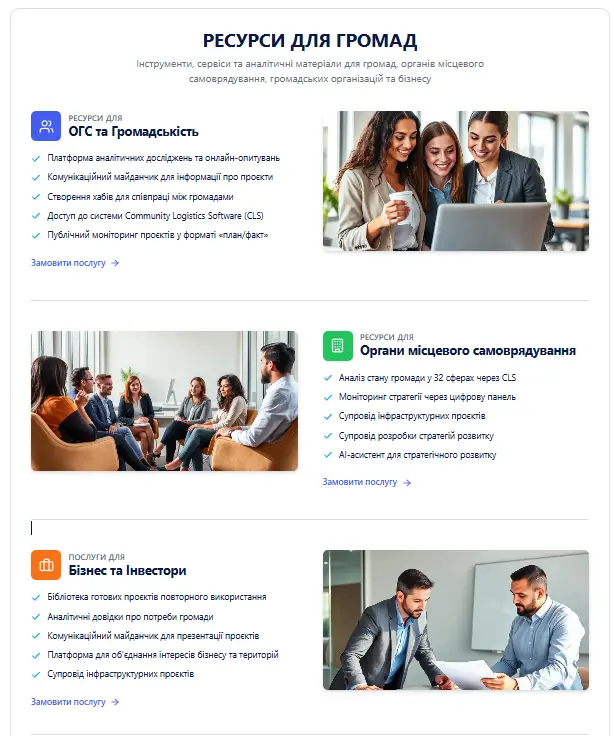
A section called "Resources for Communities" has appeared on the website of the NGO "Center for Community Development Logistics"
As part of the organization's institutional development and with the support of the International Renaissance Foundation within the framework of the Impulse project, our website has undergone positive changes. We have created a separate section "Resources for Communities." It contains tools, services, and analytical materials that the organization uses in practical work with communities.
The section was created so that communities, local governments, public organizations, businesses, and investors could easily familiarize themselves with cooperation opportunities and available resources.
For CSOs and the public
The section presents:
tools for surveying residents and collecting suggestions;
access to analytics and public monitoring of project implementation (“plan / fact”);
open review of community development strategies and plans in the CLS system;
a communication platform for exchanging information and establishing partnerships.
For local governments (LGs)
Communities and local governments can explore the following opportunities:
analysis of the state of the community based on the CLS digital model in 32 areas of life;
tools for strategic planning and monitoring the implementation of development strategies;
support of infrastructure projects - from preparation of documentation to implementation management;
analytical support for management decisions.
For business and investors
The section also contains information about:
a library of typical infrastructure reuse projects;
analytical reports on community needs;
opportunities for partnership, co-financing and participation in community projects.
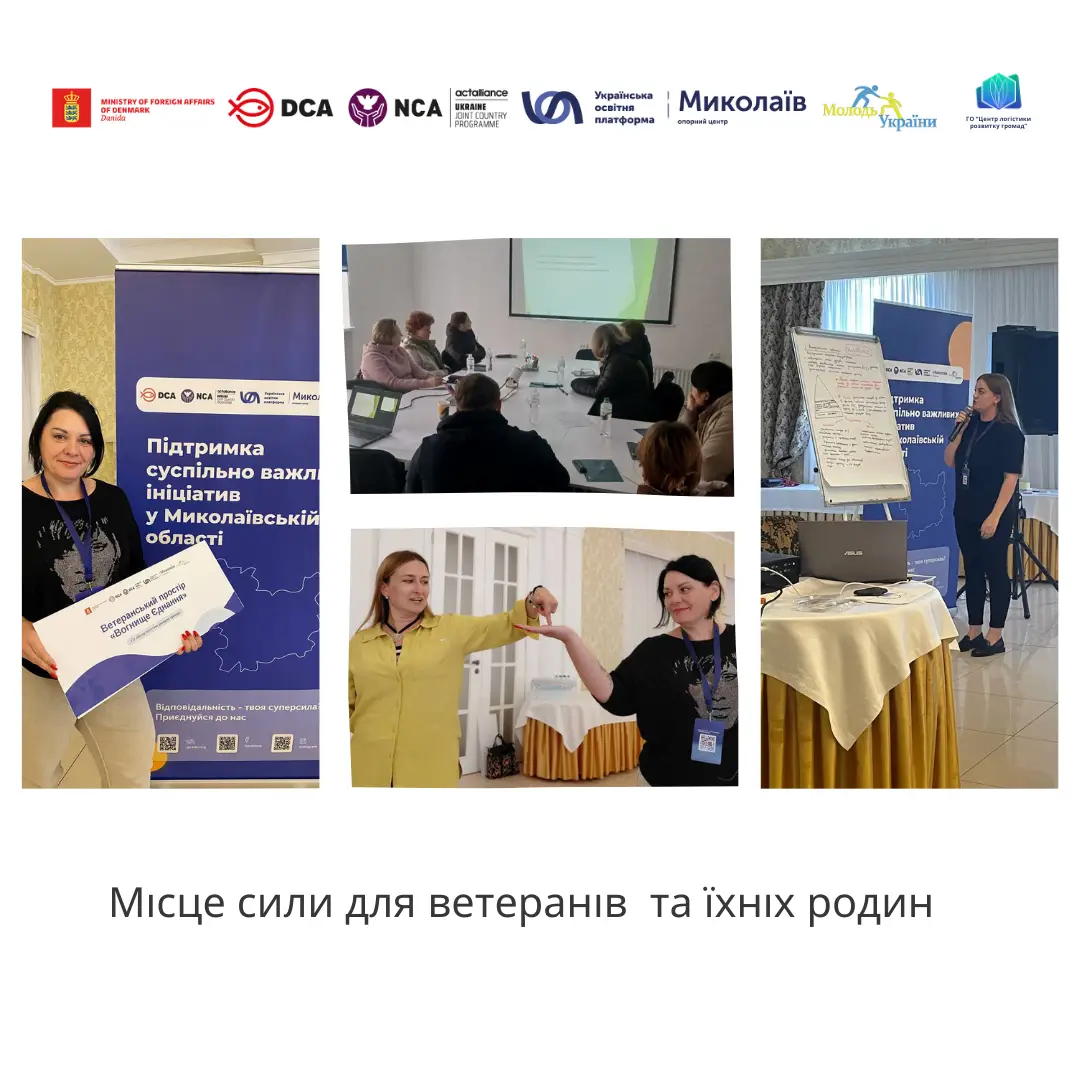
We sincerely thank all partners and the community for working together to create a space that will become an important place of support for veterans and their families.
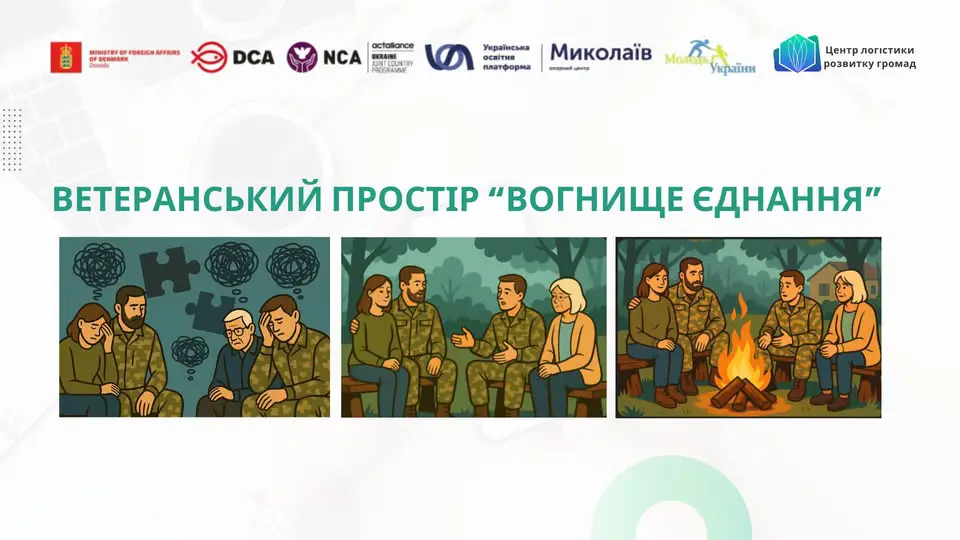
The project "Veteran Space "Heart of Unity" is implemented by the NGO "Center for Community Development Logistics" with the support of the Ukrainian Educational Platform as part of the project "Reconstruction of Social Infrastructure in Mykolaiv through a Strong Civil Society and Resilient Households", which is implemented by the UOP with financial support from DCA/NCA.
To increase the level of psycho-emotional support for veterans, military personnel, and their family members in the Doroshiv community by creating a safe space, mutual support groups, adaptation training, and consultations with specialists.
The project provides:
Permanent access to support for veterans and families. Strengthened social cohesion in the community. Increased trust in local initiatives. A long-lasting resource in the community - a space for support and reintegration.
Community: Doroshiv territorial community, Mykolaiv region Implementation period: July - October 2025
EXPECTED RESULTS: 1 functional space for veterans with an area of 60.5 m² was created. 4 support groups were held for 25 participants. At least 24 individual consultations with social protection specialists were provided. 4 trainings on adaptation, emotional recovery, and career planning were held. At least 3 information activities were held to inform residents. 45 unique beneficiaries were reached.
The Veterans Space “Heart of Unity” project is being implemented with the support of the Ukrainian Educational Platform as part of the project “Reconstruction of Social Infrastructure in Mykolaiv through a Strong Civil Society and Resilient Households”, which is being implemented by the UOP with the financial support of DCA/NCA
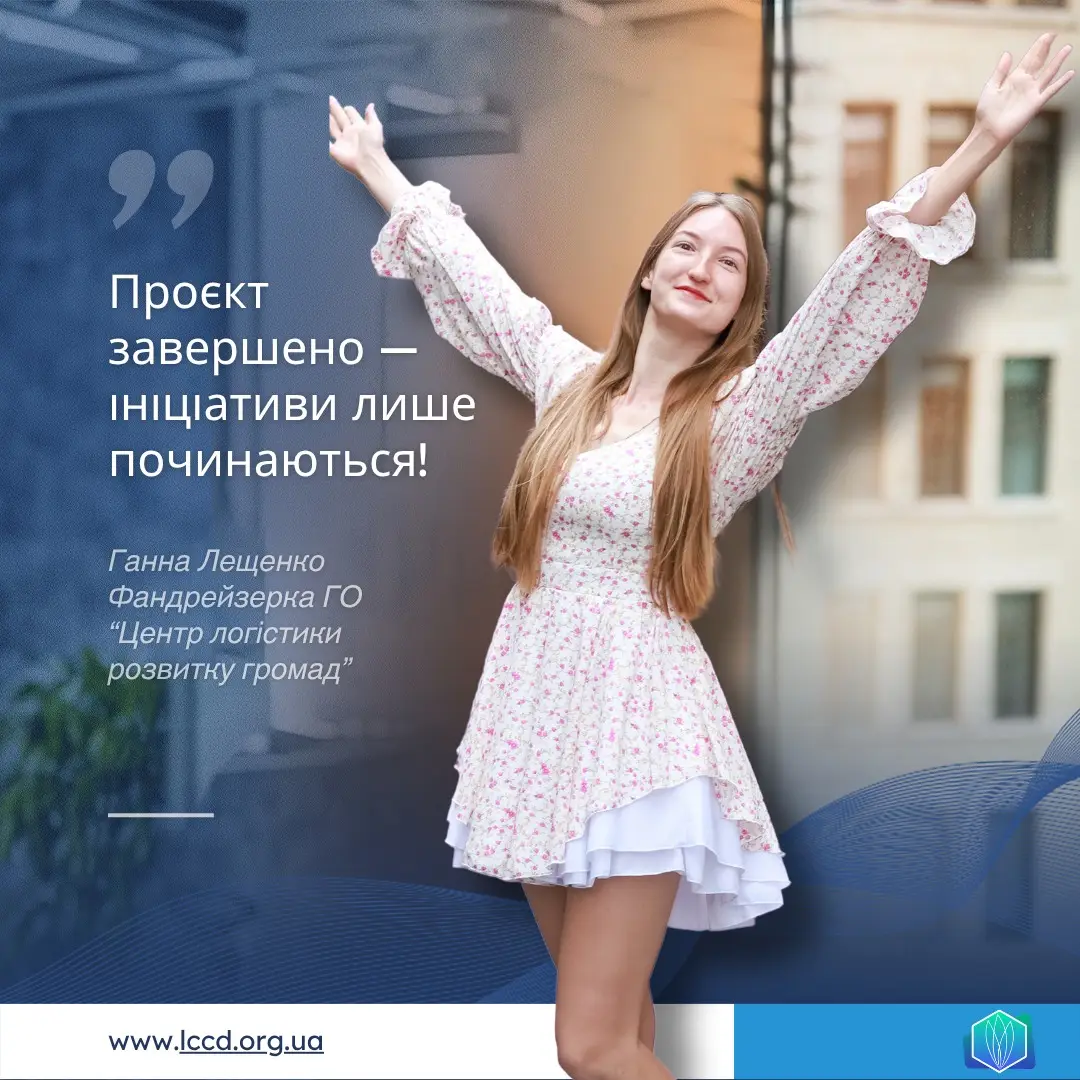
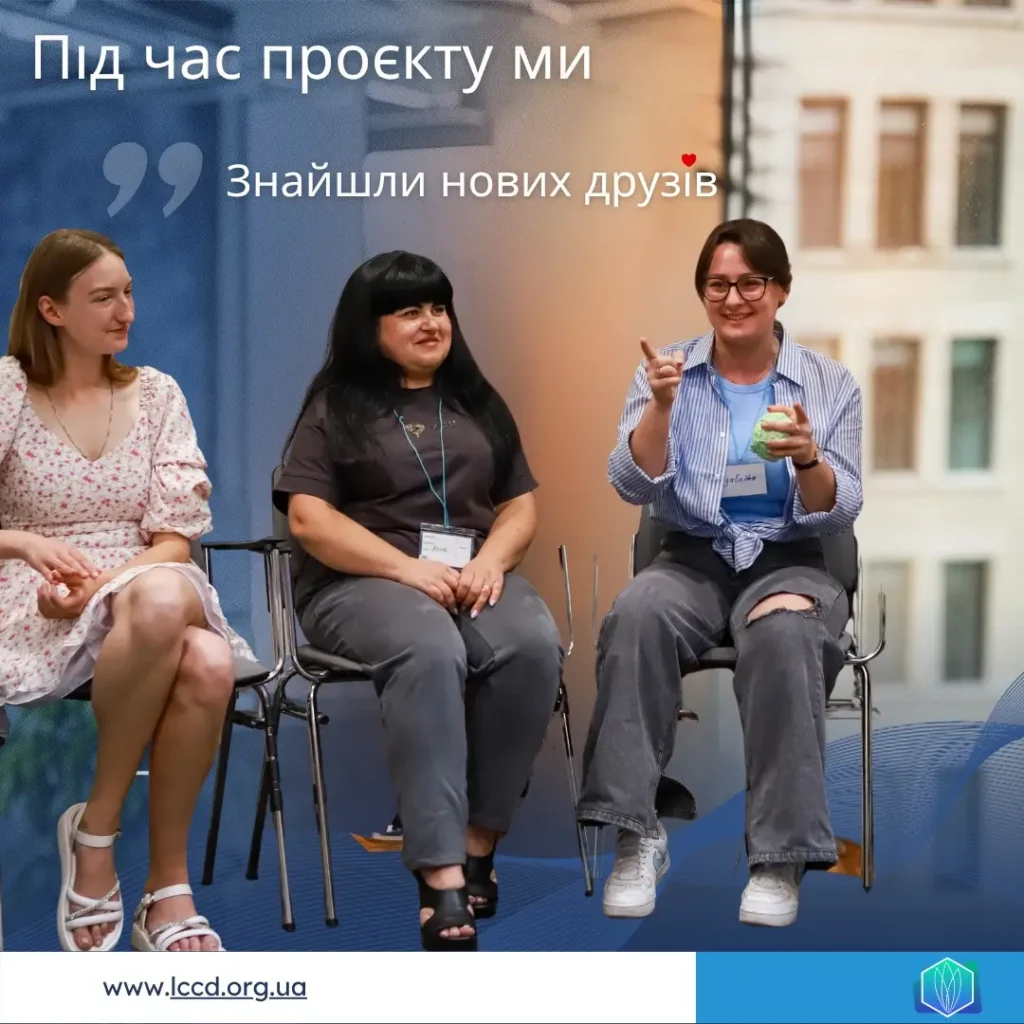
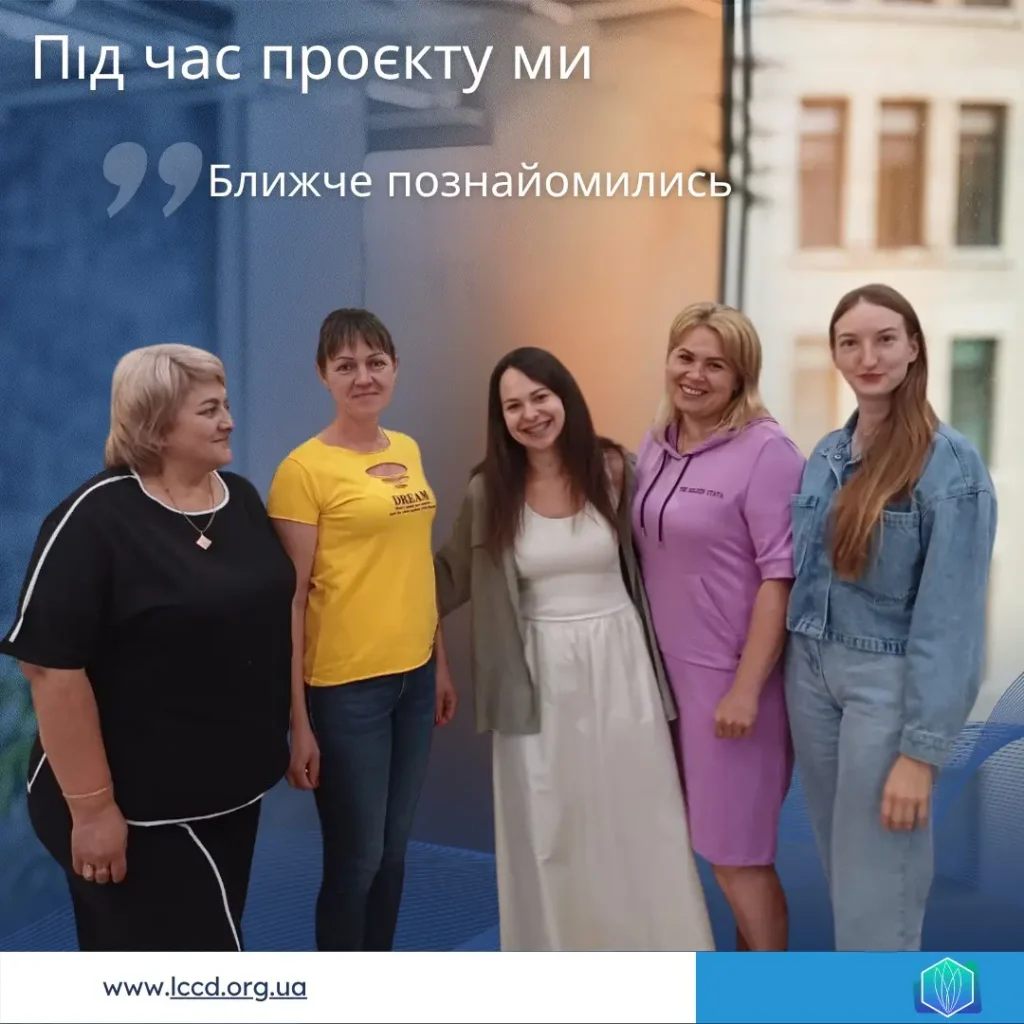
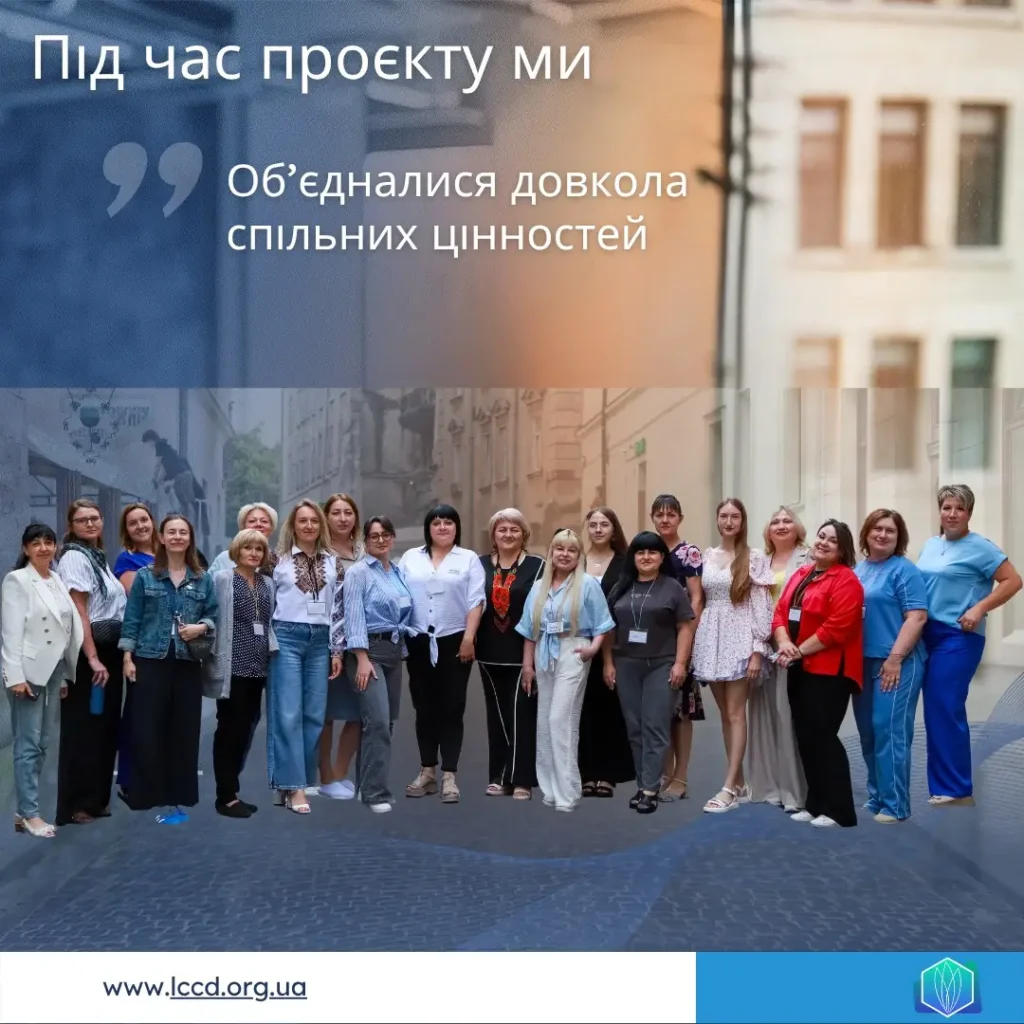
We implemented an initiative — the Public Dialogue Club, which helped make relations between the authorities and residents more open, honest, and closer.
And we also learned more about European integration, exchanged experiences, and strengthened cooperation between communities.
But this project was not just effective.
It was truly sincere.
Therefore, we want to report not only on achievements, but also on results that are not quite typical for regular reports:
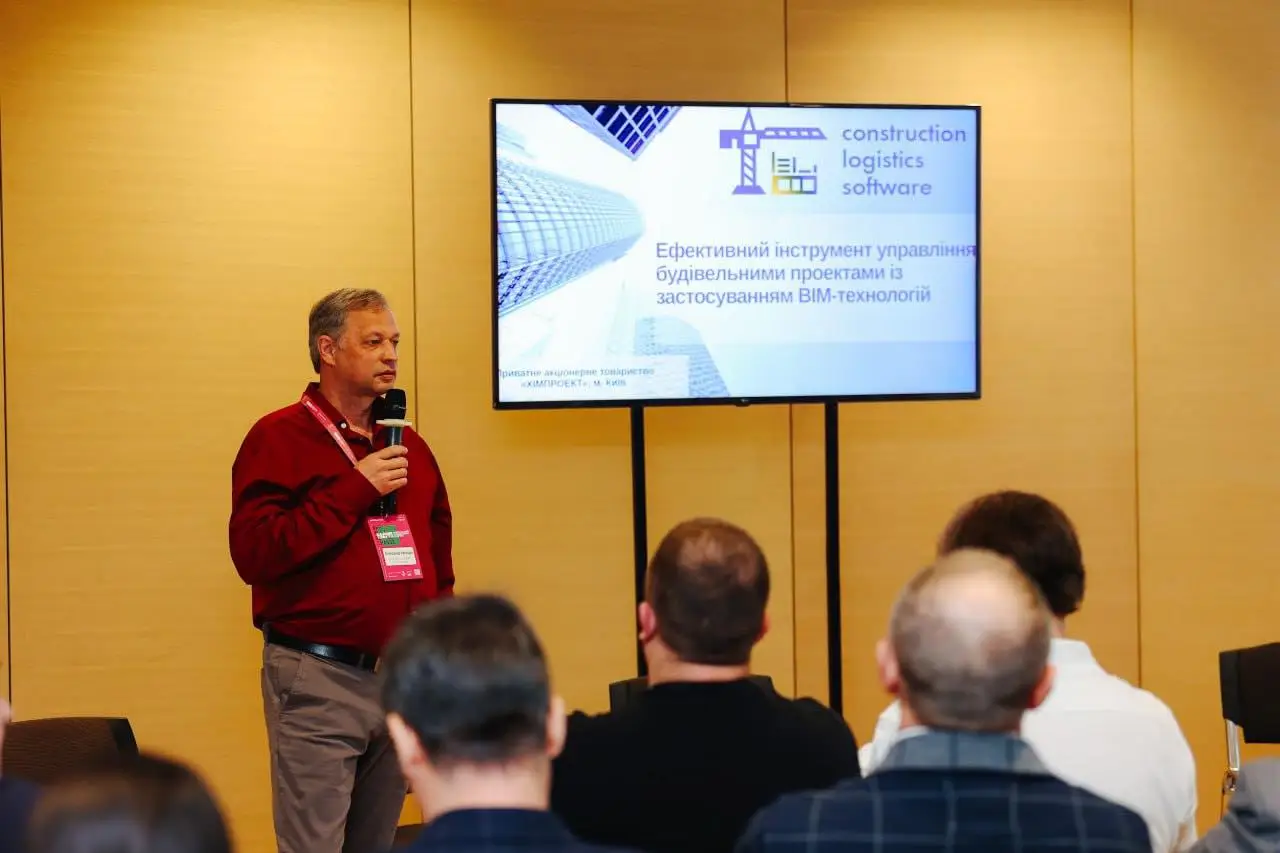
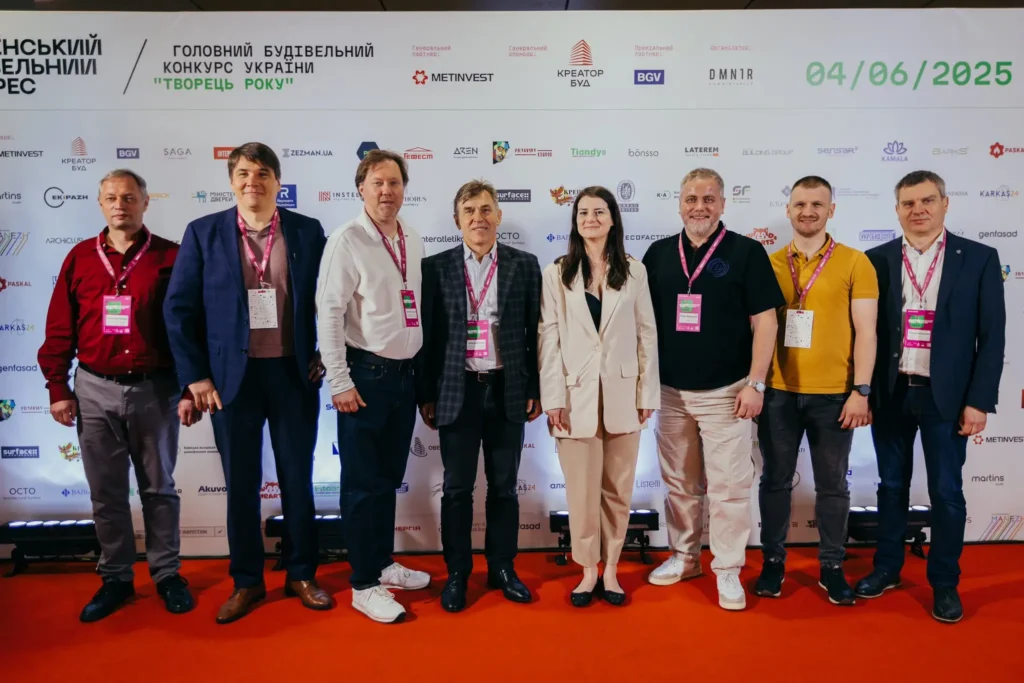
Participation in the IV Ukrainian Construction Congress
The IV Ukrainian Construction Congress was held in Kyiv — an event that brought together people who make very practical decisions every day: where to start the renovation, how to build qualitatively, quickly and honestly.
From our organization — the NGO "Center for Community Development Logistics" — our expert in construction management and community digitalization, Oleksandr Karashchuk, took part in the event.
He says there were many acquaintances, specifics, and real-life stories — exactly what those who work in communities and deal with real challenges every day need.
We discussed how to combine strategy and design, digital tools and construction processes. After all, good solutions for communities are not only about construction, but also about a vision for development for years to come.
We thank the organizers for the opportunity to be part of the dialogue that determines the directions of the country's reconstruction.
"Even when we are unable to physically build – as is the case with our community in Luhansk Oblast – we still continue to work on its future."
We have created digital tools that allow you to model the development of territories in a virtual environment, plan changes, analyze needs, and form a strategic vision. What is currently impossible to implement physically can now be designed, improved, and prepared for implementation.
And we are ready to share these solutions with others:
with communities looking for new approaches,
with those who build even when there are ruins around,
with those who, like us, don't want to stop.
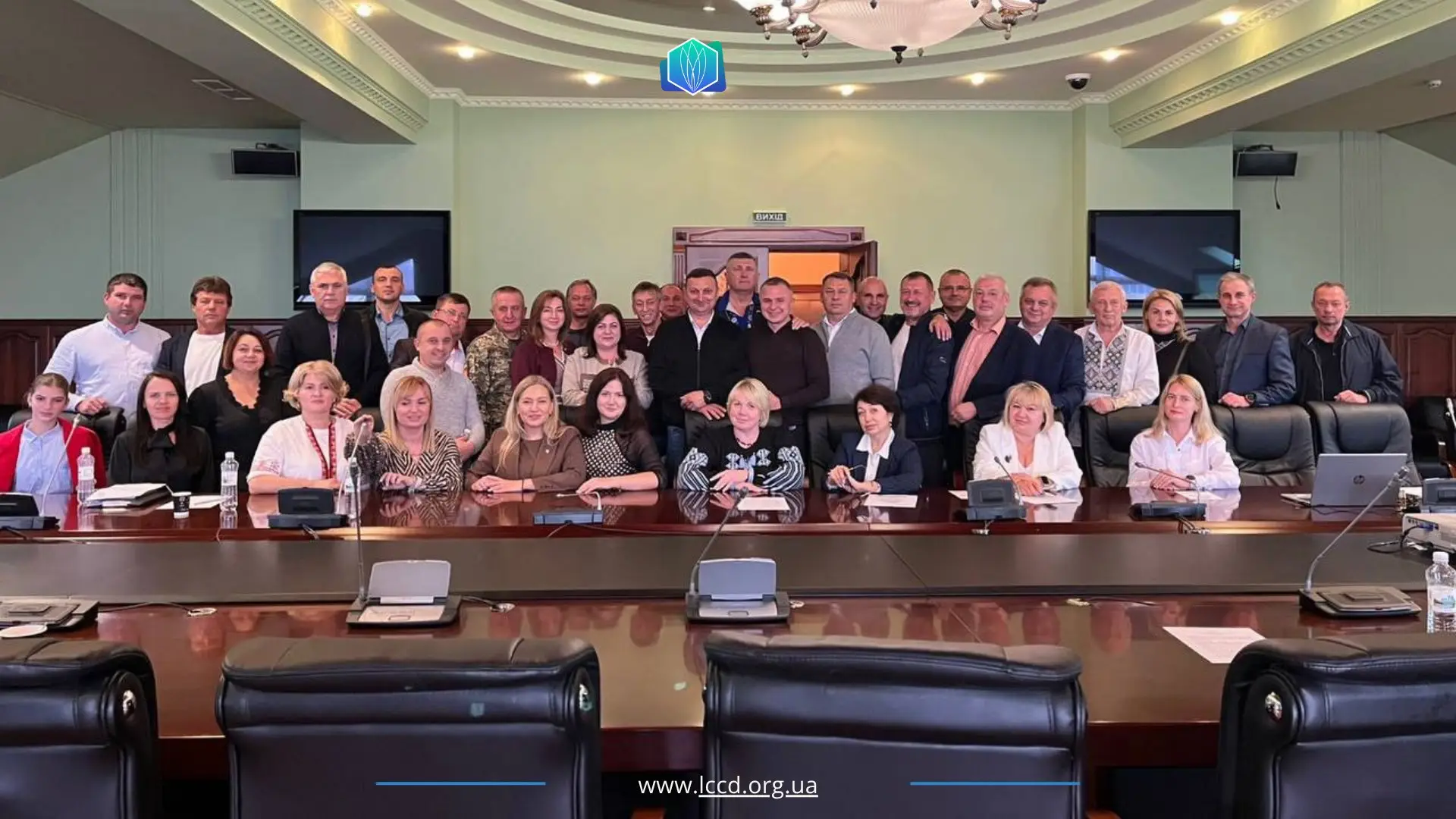
We had the opportunity to introduce CLS Ukraine to the Association of Communities of Sumy and Lviv Regions.
We don't just believe in rebuilding—we embody it every day.
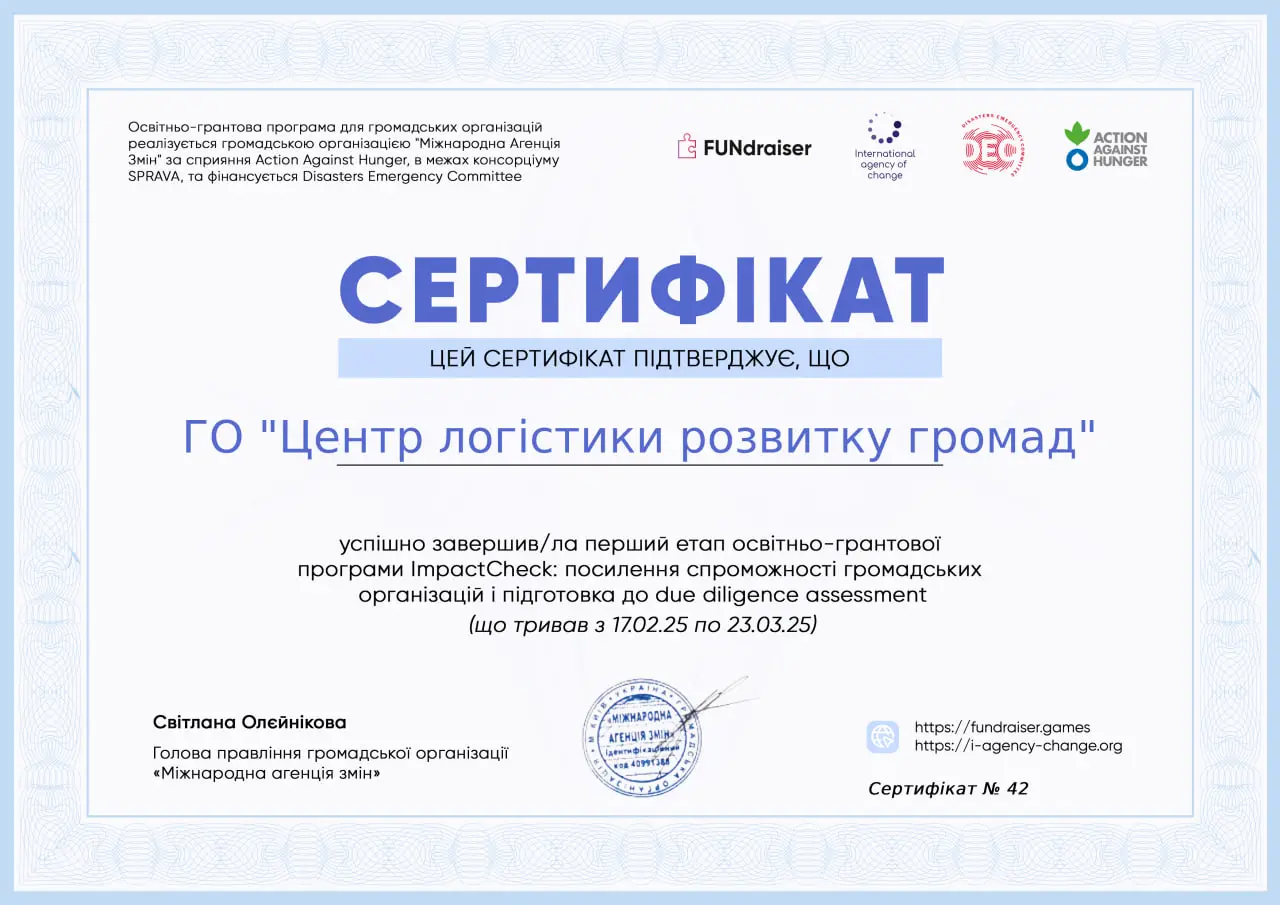
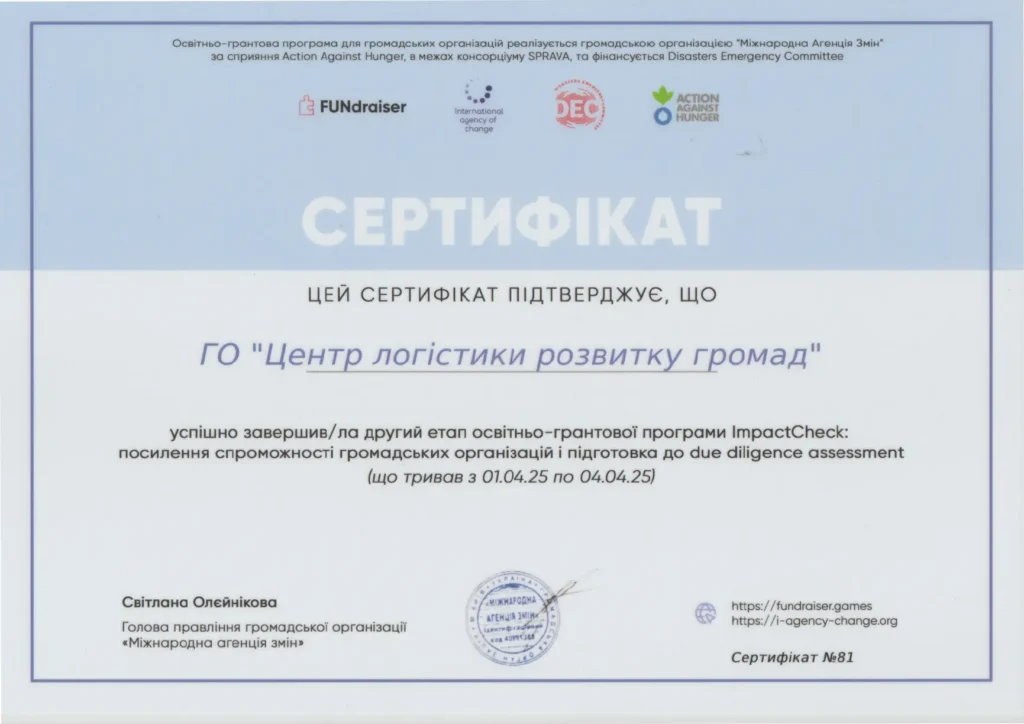
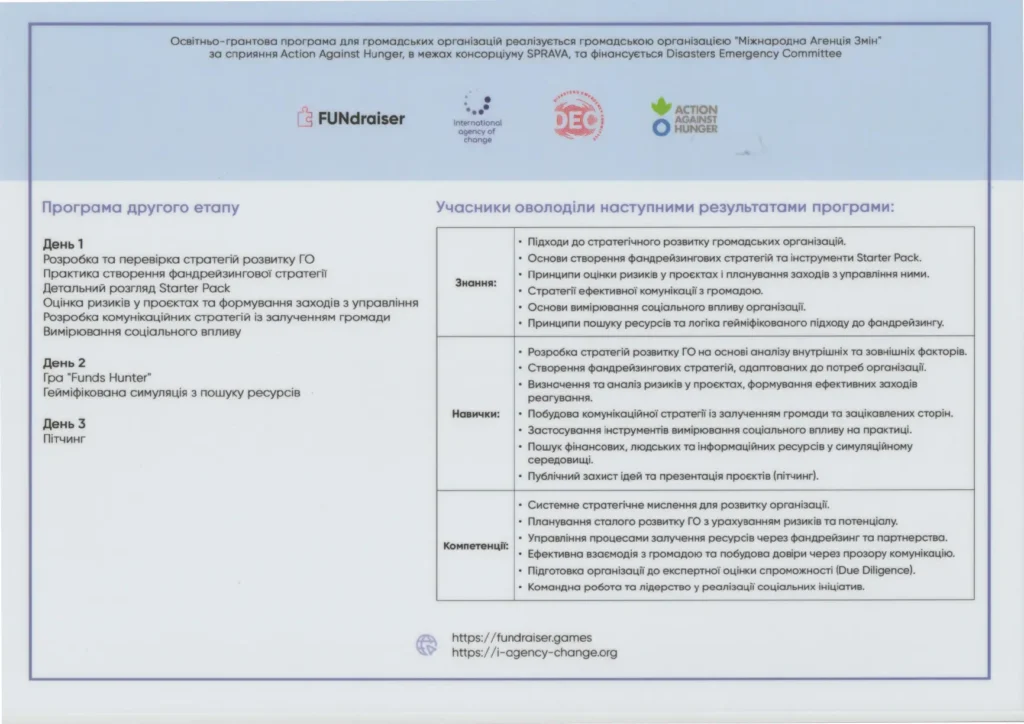
The NGO “Center for Community Development Logistics” has successfully completed both stages of the ImpactCheck educational grant program!
During February-April, we went through two intensive stages of the ImpactCheck program: strengthening the capacity of civil society organizations and preparing for the Due Diligence assessment, which is implemented by the NGO "International Agency for Change" with the support of Action Against Hunger and funding from the Disasters Emergency Committee.
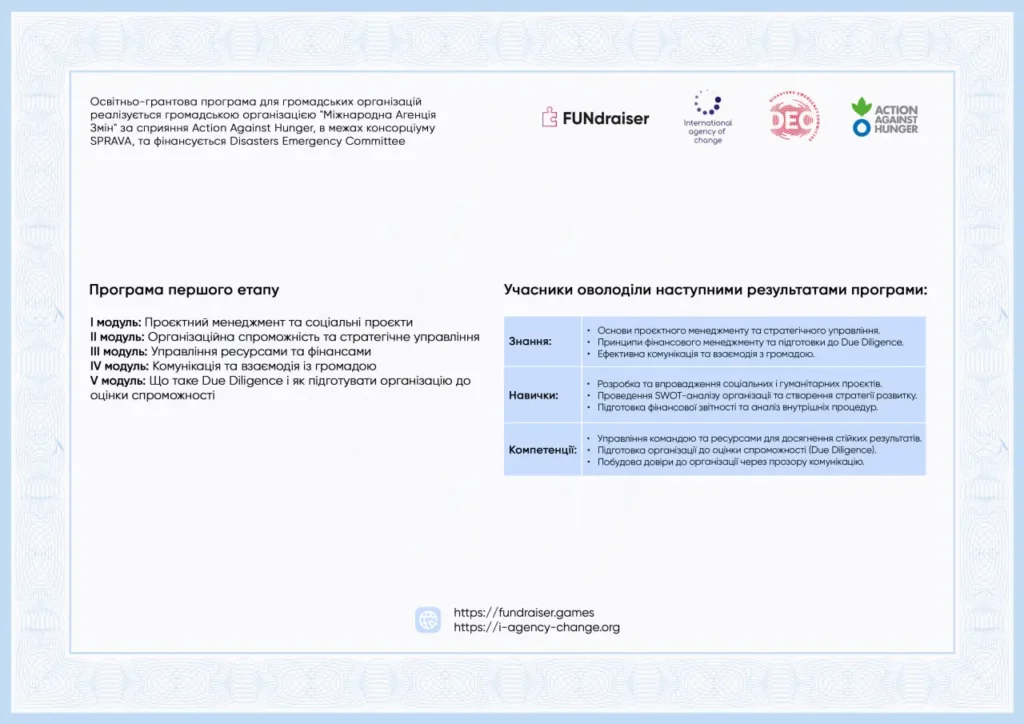
📌 First stage (17.02.25 — 23.03.25): We mastered the basics of project management, financial management, strategic planning, and community communication.
📌 Second stage (01.04.25 — 04.04.25): They learned how to develop fundraising strategies, analyze risks, build communication campaigns, and measure social impact. They also participated in the Funds Hunter game and pitching.
We received:
Systemic strategic thinking
Risk management tools
Experience in teamwork and public presentation of projects
Understanding Due Diligence requirements and readiness for capacity assessment
We are grateful to the FUNdraiser team and the International Agency of Change for the powerful program and practical benefits for our organization!
Author:
Sentiabov Anton
Cookie Consent
Ми та наші партнери використовуємо файли cookie та інші технології, щоб покращити ваш досвід та оцінити ефективність.
Contains information related to marketing campaigns of the user. These are shared with Google AdWords / Google Ads when the Google Ads and Google Analytics accounts are linked together.
90 days
__utma
ID used to identify users and sessions
2 years after last activity
__utmt
Used to monitor number of Google Analytics server requests
10 minutes
__utmb
Used to distinguish new sessions and visits. This cookie is set when the GA.js javascript library is loaded and there is no existing __utmb cookie. The cookie is updated every time data is sent to the Google Analytics server.
30 minutes after last activity
__utmc
Used only with old Urchin versions of Google Analytics and not with GA.js. Was used to distinguish between new sessions and visits at the end of a session.
End of session (browser)
__utmz
Contains information about the traffic source or campaign that directed user to the website. The cookie is set when the GA.js javascript is loaded and updated when data is sent to the Google Anaytics server
6 months after last activity
__utmv
Contains custom information set by the web developer via the _setCustomVar method in Google Analytics. This cookie is updated every time new data is sent to the Google Analytics server.
2 years after last activity
__utmx
Used to determine whether a user is included in an A / B or Multivariate test.
18 months
_ga
ID used to identify users
2 years
_gali
Used by Google Analytics to determine which links on a page are being clicked
30 seconds
_ga_
ID used to identify users
2 years
_gid
ID used to identify users for 24 hours after last activity
24 hours
_gat
Used to monitor number of Google Analytics server requests when using Google Tag Manager